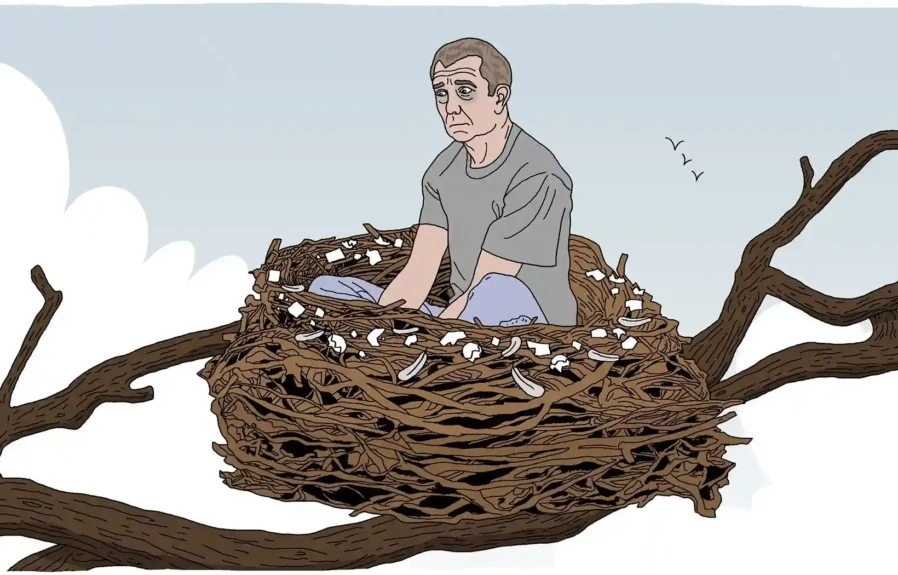
Empty nest syndrome is the emotional adjustment parents experience when children leave home. The most effective way to handle it is to rebuild daily structure, redefine your identity beyond parenting, and maintain a healthy relationship with your child while creating new sources of purpose and connection.
The morning after my youngest child left for university, I woke up at the same time I had for years—6:30 a.m.—but there was no reason to rush. No breakfast to prepare. No reminders to give. No backpacks by the door. Just… stillness.
At first, I told myself I should enjoy it. After all, this is what I had worked toward—raising independent, capable adults. But within days, something deeper surfaced: a quiet sense of loss, followed by an uncomfortable question I hadn’t asked in decades:
“Who am I now that I’m no longer needed in the same way?”
If you’re asking how to handle empty nest syndrome, this is the most honest answer I can give you:
You don’t “fix” it overnight. You move through it—by rebuilding your identity, your routines, and your sense of meaning, step by step.
This is how it actually unfolds.
Table of Contents
The First Phase: When the House Feels Too Big
The first two weeks were the hardest.
I kept expecting to hear familiar sounds—the door opening, laughter from another room, someone calling “Mom” or “Dad.” My brain hadn’t caught up with reality yet. Psychologists call this a habit and attachment disruption—your daily emotional feedback system suddenly goes quiet.
I made a mistake early on: I tried to fill the silence by constantly checking my phone.
“Did they eat?”
“Are they okay?”
“Should I call?”
I wasn’t just missing my child—I was missing my role.
And that’s the part people don’t say out loud: Empty nest syndrome is less about losing your child and more about losing your daily identity as a parent.
The Turning Point: Realizing This Was a Transition, Not an Ending
About three weeks in, I had a conversation that changed everything.
A colleague—who had gone through this years earlier—said something simple:
“Your job as a parent didn’t end. It evolved.”
That reframing mattered.
Instead of thinking:
“I’m no longer needed”
I began to think:
“I’m needed differently now”
That shift reduced the emotional weight almost immediately. Research in cognitive psychology supports this—how we interpret change directly affects emotional distress.
Rebuilding Structure
Here’s something most people get wrong:
They wait to “feel better” before doing something new.
That doesn’t work.
I didn’t feel motivated—but I forced structure anyway.
I created a simple weekly framework:
Morning walks (even when I didn’t want to)
Fixed work hours (no drifting)
One social interaction per week
One personal activity (reading, learning, or exercise)
At first, it felt artificial. But within a few weeks, something shifted.
Structure came before meaning—not the other way around.
Rediscovering Parts of Myself I Had Paused
Parenting is all-consuming—in ways we don’t fully realize until it changes.
I started asking myself uncomfortable but important questions:
What did I enjoy before becoming a full-time parent?
What did I postpone?
What am I still curious about?
For me, the answer was simple: I had always wanted to learn design and writing more seriously.
So I started small:
Online courses
Writing short reflections
Exploring creative work again
At first, it felt strange—almost selfish.
But over time, it became something else:
It felt like reclaiming a part of myself I had set aside, not lost.
Redefining My Relationship With My Child
One of the hardest adjustments was communication.
I had to stop myself from overreaching—calling too often, asking too many questions, trying to stay “involved” in the same way.
That instinct comes from love—but it can create distance instead of connection.
So I shifted to a healthier pattern:
One scheduled weekly call
Occasional messages without expectation
Letting them initiate conversations too
And something surprising happened:
Our relationship became stronger—not because we spoke more, but because we respected each other’s independence.
Reconnecting With My Partner (or Yourself)
If you have a partner, this phase can feel unfamiliar.
For years, your relationship may have revolved around your children. Without that shared focus, you’re left facing each other again—sometimes as slightly different people.
We had to relearn how to spend time together:
Walking without a “task”
Talking without logistics
Planning things just for us
If you’re not partnered, this step becomes even more important:
You need to intentionally rebuild connection—with friends, communities, or new environments.
Isolation is one of the biggest risks during this transition.
The Emotional Dip No One Talks About
Around the 2–3 month mark, I hit an unexpected low.
Not intense sadness—but a kind of flatness.
This is common. The initial shock fades, but your new identity isn’t fully formed yet. You’re in between.
This is where many people get stuck.
The only way through it is to keep building—even when it doesn’t feel meaningful yet.
And eventually, it starts to click.
The Shift: When Life Starts Feeling Full Again
For me, it happened gradually—not dramatically.
One day I realized:
I wasn’t checking my phone constantly
I had things I was looking forward to
My days felt intentional again
And the silence that once felt heavy?
It started to feel like space.
What Actually Works
If you want a clear, practical answer, here it is:
1. Accept That This Is Normal
You’re not failing—you’re transitioning.
2. Build Structure Immediately
Don’t wait for motivation. Routine stabilizes your mind.
3. Expand Your Identity
You are more than a parent. Actively prove that to yourself.
4. Adjust (Not Reduce) Your Relationship With Your Child
Connection should evolve—not disappear.
5. Invest in Relationships
Loneliness prolongs the adjustment phase.
6. Set New Goals
Purpose doesn’t return automatically—you create it.
When It’s More Than Just Adjustment
If feelings turn into:
Persistent sadness
Loss of interest in everything
Isolation or withdrawal
Sleep or appetite changes
It may be more than empty nest syndrome.
At that point, speaking with a licensed therapist is not a weakness—it’s a strategic step toward recovery.
What No One Tells You (But You Should Know)
Empty nest syndrome feels like loss at first.
But if you move through it intentionally, it becomes something else entirely:
It becomes a second adulthood—with more freedom, clarity, and control than the first.
Maintaining a healthy, evolving relationship with your child
Creating new purpose through goals, relationships, and personal growth
And most importantly:
You allow yourself time to adjust—without assuming something is wrong.
FAQs
How do you cope with empty nest syndrome?
Coping involves rebuilding daily structure, reconnecting with personal interests, strengthening social relationships, and maintaining a healthy, evolving connection with your child. Evidence-based approaches like routine-setting, cognitive reframing, and social engagement significantly reduce emotional distress.
There is no fixed timeline. For many parents, the most intense feelings last a few weeks to a few months. With active adjustment—such as developing new routines and goals—most people experience noticeable improvement within 3–6 months.
Why do parents feel sad when children leave home?
The sadness comes from a combination of role identity loss, reduced daily interaction, and changes in emotional attachment patterns. Parenting provides structure and purpose, so its sudden shift can create a temporary emotional void.
No, it is not a clinical diagnosis. However, it can lead to depression in some cases if feelings persist or worsen. If symptoms like ongoing sadness, loss of interest, or sleep issues continue, professional support may be necessary.
Can empty nest syndrome affect both parents?
Yes. While it may present differently, both mothers and fathers can experience emotional adjustment challenges. Research shows that impact depends more on personal identity, lifestyle, and coping strategies than gender alone.






 and then