
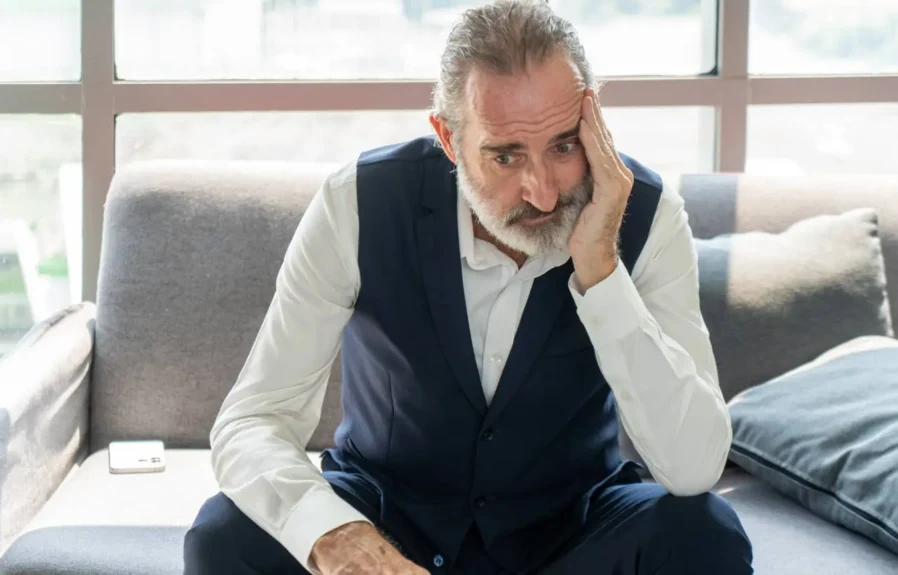
Retirement anxiety is the fear or uncertainty people experience when preparing to leave work. It can involve financial concerns, loss of identity, loneliness, changes in marriage, and uncertainty about how to spend time. Preparing emotionally as well as financially can make the transition into retirement easier.
MidEdu.com
I’m 59 years old, and for most of my working life, I dreamed about retirement.
I imagined waking up without an alarm, drinking coffee on the back porch, taking road trips with my wife, and finally having enough time to do the things I kept postponing.
Now retirement is only a few years away, and instead of feeling excited, I feel anxious.
I’ve started asking myself questions I never expected to ask.
What if I retire too early? What if I run out of money? What will I do every morning? Who will I be without my job?
That last question bothers me the most.
Table of Contents
My Retirement Anxiety Isn’t Really About Money
I’ve spent years preparing financially.
My wife and I have retirement savings. We’ve paid down most of our mortgage. I check our accounts more often than I probably should, and I’ve used several online retirement calculators to estimate what our future might look like.
We’re not wealthy, but we’re not starting from zero either.
So why am I still worried?
I think my retirement anxiety is partly about losing control.
At work, I know exactly what I’m supposed to do. I have responsibilities. People depend on me. There is a schedule. There are problems to solve.
Even on stressful days, I know my role.
Retirement feels like stepping into a room without knowing what I’m supposed to do next.
I’ve Realized How Much My Job Defines Me
I’ve worked in the same industry for more than 30 years.
When people ask me what I do, I answer automatically.
My job has been part of my identity for so long that I never really considered what happens when that answer disappears.
Recently, a younger coworker asked me when I planned to retire.
I laughed and said, “Hopefully sooner rather than later.”
But afterward, I couldn’t stop thinking about it.
What happens when I’m no longer the person everyone calls when something goes wrong?
What happens when nobody needs my experience anymore?
I know that’s probably an exaggerated way of looking at retirement. But emotionally, it feels real.
I’m beginning to understand that retirement anxiety isn’t always about money. Sometimes it is about identity, purpose, routine, relationships, and the fear of becoming irrelevant.
My Wife Thinks I’m Overthinking Everything
My wife doesn’t completely understand my anxiety.
She keeps reminding me that we’ve waited years for this.
She wants to travel more. She talks about visiting our grandchildren, taking weekend trips, and finally replacing some of the furniture we’ve been putting off buying.
She tells me, “You’ll wonder why you didn’t retire sooner.”
I hope she’s right.
But there is another issue I haven’t talked about much.
We’ve been married for 34 years, and we’ve never actually lived together without work being part of our daily routine.
For decades, one of us was leaving for work, coming home tired, running errands, preparing dinner, paying bills, or dealing with the kids.
What happens when we suddenly have all day, every day together?
I love my wife.
That isn’t the question.
The question is whether we know how to build a life together that doesn’t revolve around work.
I’m Also Afraid of Being Lonely
This is something I rarely admit.
I’ve always considered myself independent.
I don’t need to be surrounded by people all the time.
But most of my friendships came through work. We talk in the parking lot, grab lunch, complain about management, share stories about our families, and occasionally meet for a beer after work.
When I retire, those conversations will probably become less frequent.
My closest friends are also getting older.
Some are already retired. Others are dealing with aging parents, health concerns, or family problems.
It has made me realize that retirement isn’t just about having free time.
It’s about deciding who you want to spend that free time with.
Maybe I Have Been Preparing for Retirement the Wrong Way
For years, I thought retirement preparation meant saving enough money.
Save more.
Pay off debt.
Figure out Social Security.
Estimate healthcare costs.
Choose when to stop working.
Those things matter.
But I never prepared for the emotional side of retirement.
I never asked myself what would give me a reason to get out of bed on a Tuesday morning.
I never thought about how I would replace the social interaction I get from work.
I never considered how much confidence comes from being experienced at something.
And I certainly never thought about how strange it might feel to introduce myself without mentioning my career.
I’m Trying Something Different
I’ve decided not to wait until my final day at work to figure everything out.
I’m starting now.
I’ve started fixing up an old fishing boat that’s been sitting in my garage for years. I’m spending more time with my grandchildren. I’ve reconnected with a friend I hadn’t spoken to in almost two years.
I’ve also been thinking about volunteering.
Maybe I could help younger people entering my industry. I’ve spent decades learning things that aren’t necessarily taught in a classroom.
For the first time, I’m considering that retirement doesn’t have to mean becoming less useful.
Maybe it means using my experience differently.
That thought has helped.
What I’m Learning About Retirement Anxiety
I still have concerns.
I’m still going to check our retirement accounts.
I’m still going to worry about healthcare costs and unexpected expenses.
And I’m sure I’ll have days when I wonder whether retiring was the right decision.
But I’m beginning to see retirement differently.
Maybe the goal isn’t to eliminate every fear before retiring.
Maybe the goal is to understand those fears and prepare for them.
Financial preparation can tell me whether I can afford to stop working.
But emotional preparation may determine whether I actually enjoy the life that comes afterward.
I’m 59.
I don’t think I’m too old to start figuring out who I want to become next.
Maybe that’s the part of retirement nobody talks about enough.
We’re so focused on when we can retire that we forget to ask what we want our retirement to look like.
And perhaps that’s where I’m going to start.
Not with a retirement date.
With a life plan.
Have You Experienced Retirement Anxiety?
If you’re approaching retirement and feeling nervous instead of excited, you’re certainly not alone.
I’d genuinely like to hear from people who have already gone through this transition.
Did you experience retirement anxiety before leaving work? Were you more worried about money, losing your identity, loneliness, your marriage, or simply not knowing what to do with your time? And what helped you finally feel comfortable with retirement?
Sometimes hearing how someone else navigated the transition can make the road ahead feel a little less frightening.
FAQs
What is retirement anxiety?
Retirement anxiety is the fear, stress, or uncertainty associated with leaving the workforce. It can involve concerns about money, identity, loneliness, daily routines, relationships, and finding purpose after retirement.
Why am I afraid of retirement when I have enough money?
Fear of retirement isn’t always financial. Work can provide identity, structure, social connections, confidence, and a sense of purpose. Even financially prepared people can experience strong retirement anxiety when those familiar parts of life are about to change.
How do I deal with the fear of retirement?
Start preparing for more than your finances. Build friendships outside work, develop interests and routines, explore volunteering or part-time opportunities, and think about what will give your retirement meaning and structure.
Can retirement cause an identity crisis?
Yes. A retirement identity crisis can happen when someone has connected their self-worth closely to their career. Losing a professional role can feel like losing part of yourself. Developing new roles and activities can help create a healthy identity after retirement.
How can I find purpose after retirement?
Finding purpose after retirement often means discovering ways to stay connected, active, and useful. Mentoring, volunteering, hobbies, family activities, community involvement, travel, and learning new skills can all provide meaning beyond a traditional career.



 and then