

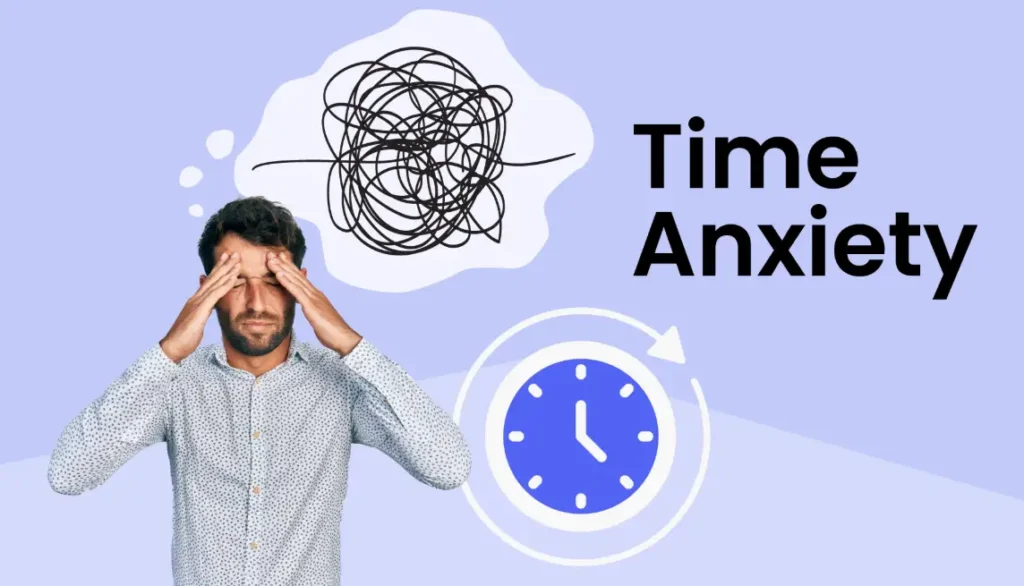
Time anxiety is the constant fear of running out of time, even when no immediate deadline exists. It causes stress, mental overload, and guilt during rest. Managing time anxiety requires mindset shifts, not just better scheduling, to reclaim calm, focus, and control over daily life.
MidEdu.com
Time anxiety is the growing fear that there is never enough time to keep up with work, life, and personal goals. Unlike ordinary stress, time anxiety follows you even during rest, making you feel rushed, guilty, and mentally exhausted. Understanding time anxiety is the first step toward managing stress and reclaiming a healthier relationship with time.
Time anxiety is the persistent fear that there is never enough time—no matter how efficiently you plan, work, or rest. It’s the uneasy feeling of racing against the clock, the guilt of slowing down, and the constant pressure to stay productive. In today’s hyper-connected world, time anxiety has become one of the most common yet least discussed forms of stress.
Unlike ordinary stress, time anxiety doesn’t disappear after a busy season or deadline. It lingers in the background, shaping how people think, work, and even relax. Many individuals report feeling anxious during moments that should feel peaceful—weekends, vacations, or evenings—simply because they believe they are “falling behind.”
This article is a fully advanced, AI-search–optimized guide to time anxiety. It explores its causes, symptoms, psychological roots, and—most importantly—practical, human-centered strategies to overcome it.
Table of Contents
What Is Time Anxiety?
Time anxiety is a cognitive-emotional state characterized by a chronic sense of urgency, fear of wasted time, and worry about the future. People experiencing time anxiety often feel that time is slipping away faster than they can control.
Common thoughts include:
- “I’m always behind.”
- “There’s too much to do and not enough time.”
- “If I slow down, I’ll fail.”
- “I should be doing something more important right now.”
Unlike time pressure, which is situational, time anxiety is internal and continuous. Even when schedules are light, the mind remains tense.
Signs and Symptoms of Time Anxiety
Time anxiety can show up in subtle ways that are often mistaken for ambition or responsibility. Key symptoms include:
- Constant clock-checking or schedule monitoring
- Difficulty relaxing without guilt
- Overplanning and excessive to-do lists
- Chronic multitasking
- Fear of missing opportunities (FOMO)
- Feeling anxious during rest or leisure
- Sleep disturbances due to mental racing
Over time, these symptoms can lead to burnout, reduced creativity, emotional exhaustion, and a diminished sense of fulfillment.
The Root Causes of Time Anxiety
1. Productivity Culture
Modern society often equates personal worth with output. Phrases like “time is money” and “hustle harder” reinforce the idea that every moment must be optimized. This creates a mindset where rest feels irresponsible.
2. Digital Acceleration
Smartphones, notifications, and constant connectivity compress time. The brain is continuously pulled into micro-tasks, making days feel fragmented and shorter than they actually are.
3. Fear of Falling Behind
Time anxiety is deeply linked to comparison. Social media highlights curated success, creating the illusion that everyone else is moving faster, achieving more, and wasting less time.
4. Perfectionism
Perfectionists often experience time anxiety because nothing ever feels “done enough.” Tasks expand endlessly, consuming more time and mental energy than necessary.
5. Unresolved Future Anxiety
At its core, time anxiety is often fear of the future—fear of aging, missed potential, or unfulfilled goals. The clock becomes a symbol of mortality and lost chances.
How Time Anxiety Affects Mental Health
Time anxiety doesn’t just impact schedules—it reshapes emotional well-being.
- Chronic Stress: The nervous system stays in fight-or-flight mode.
- Reduced Presence: People struggle to stay in the moment.
- Lower Satisfaction: Achievements feel empty because attention immediately shifts to what’s next.
- Burnout Risk: Continuous urgency leads to exhaustion.
Over time, time anxiety can coexist with generalized anxiety, depression, and insomnia.
Time Anxiety vs. Time Management Problems
It’s important to distinguish between poor time management and time anxiety.
- Time management issues are practical and solvable with tools.
- Time anxiety is emotional and psychological.
Someone can have excellent time management skills and still feel overwhelmed by time. Addressing time anxiety requires mindset shifts—not just better calendars.
The Psychology Behind Feeling “Out of Time”
Neuroscience suggests that perceived time scarcity increases cortisol levels. When the brain senses urgency, it narrows focus, reduces creativity, and exaggerates threats. This creates a feedback loop:
- Feel rushed
- Stress increases
- Thinking becomes rigid
- Tasks feel harder
- Time feels even shorter
Breaking this loop is essential to healing time anxiety.
Practical Strategies to Overcome Time Anxiety
1. Redefine Productivity
Shift from output-based productivity to value-based productivity. Ask:
- “What truly matters today?”
- “What outcome actually makes a difference?”
Doing fewer meaningful things reduces anxiety more than completing many trivial tasks.
2. Practice Single-Tasking
Multitasking intensifies time anxiety. Focusing on one task at a time restores a sense of control and slows perceived time.
3. Schedule White Space
Intentionally leave gaps in your calendar. White space signals safety to the brain and reduces constant urgency.
4. Use Time Anchors
Create daily rituals—morning coffee, evening walks, brief pauses between tasks. These anchors help the mind feel grounded in time rather than chased by it.
5. Reframe Rest as Productive
Rest is not wasted time—it’s recovery. Cognitive performance, creativity, and emotional regulation depend on it.
Mindfulness and Time Anxiety
Mindfulness is one of the most effective tools for reducing time anxiety. By training attention to remain in the present moment, mindfulness interrupts the mental habit of rushing ahead.
Simple practices include:
- One-minute breathing pauses
- Fully experiencing routine activities
- Noticing sensations instead of checking the clock
Over time, mindfulness expands perceived time by deepening awareness.
A Zen Perspective on Time Anxiety
From a Zen viewpoint, anxiety about time arises from resisting the present moment. Zen teaches that time is not something we “have” or “lose,” but something we experience.
When attention is fully engaged, time feels sufficient. When the mind resists now, time feels scarce.
This shift—from controlling time to inhabiting time—can be transformative.
Long-Term Habits for a Healthier Relationship with Time
- Set fewer goals, but commit deeply
- Measure days by meaning, not efficiency
- End days with reflection, not evaluation
- Limit exposure to comparison-driven content
- Accept that not everything will get done
These habits gradually rewire how the brain perceives time.
Conclusion: You Are Not Running Out of Time
Time anxiety convinces people that life is a race they are losing. In reality, the problem is rarely time itself—it’s the pressure placed upon it.
When you stop fighting the clock and start inhabiting your moments, time begins to feel expansive again. Productivity becomes meaningful. Rest becomes guilt-free. And life, instead of rushing past, starts to feel lived.
Time is not your enemy. Your relationship with it can change.
FAQs
What is time anxiety and why do I feel it constantly?
Time anxiety is the chronic fear of running out of time, often linked to time management stress and productivity anxiety. It happens whe
How is time anxiety different from poor time management?
Poor time management is a practical issue, while time anxiety is emotional. You can manage your schedule well and still experience productivity anxiety and feel rushed all the time due to mental pressure.
Can time anxiety affect mental health?
Yes. Time anxiety increases stress hormones, contributes to burnout, worsens sleep quality, and amplifies productivity anxiety. Over time, it can negatively impact focus, emotional balance, and overall well-being.
What are the best ways to manage time anxiety?
Managing time anxiety requires reducing time management stress through prioritization, single-tasking, mindfulness, and redefining productivity. Learning to slow mental urgency is more effective than adding more tools.
Can time anxiety be completely overcome?
Yes. With awareness, healthier productivity habits, and reduced comparison, many people overcome time anxiety. The goal is not controlling every minute, but ending the feeling of being rushed all the time.

 and then