

The loneliest moment middle-aged women feel in midlife occurs when identity shifts but emotional support does not. As roles change and recognition fades, many women experience emotional loneliness—not from isolation, but from feeling unseen during a critical life transition.
MidEdu.com
The loneliest moment middle-aged women feel in midlife is rarely dramatic. It often emerges when life appears stable, yet emotional needs and identity changes go unnoticed. This quiet loneliness reflects a deeper transition many women experience but rarely voice.
The loneliest moment middle-aged women feel in midlife rarely announces itself.
It doesn’t arrive with a dramatic event, a public breakdown, or a visible crisis. Instead, it comes quietly—often when life appears stable, responsibilities are fulfilled, and everything seems “fine.”
And yet, something feels profoundly missing.
This loneliness is not about being alone. It is about being unseen during a deep internal transition—one that society rarely talks about, and women are often expected to endure silently.
Table of Contents
When Midlife Looks Full—but Feels Empty
For many women, midlife is the busiest season of life.
Children may still need guidance or have recently left home. Aging parents require care. Careers demand consistency. Partnerships settle into predictable routines. On the surface, life is full.
Yet this fullness can mask an emotional absence.
The loneliest moment middle-aged women feel often appears when they realize:
- No one asks how they are emotionally
- Their inner changes go unnoticed
- Their value is tied to what they provide, not who they are
It’s a moment of recognition—not that life has failed, but that their inner world has changed while the external world hasn’t caught up.
The Quiet Identity Shift No One Prepared Them For
Midlife brings one of the most profound identity shifts a woman will experience.
Roles that once defined her—mother, caregiver, supporter, achiever—begin to loosen or change shape. Children grow independent. Family dynamics shift. Physical and hormonal changes alter emotional responses, energy levels, and self-perception.
Yet society offers very little guidance for this stage.
Unlike adolescence or early adulthood, midlife transitions are not openly acknowledged or celebrated. Women are expected to adapt seamlessly, without complaint.
This gap—between inner transformation and external recognition—is where loneliness takes root.
Emotional Loneliness vs. Being Alone
One of the biggest misunderstandings about midlife loneliness is assuming it comes from isolation.
In reality, many middle-aged women experiencing the loneliest moment of their lives are surrounded by people.
The issue is emotional loneliness, not physical solitude.
Emotional loneliness occurs when:
- Conversations stay surface-level
- Vulnerability feels unsafe or unwelcome
- Emotional labor flows outward but not inward
Women in midlife often become emotional anchors for others while losing a safe place to rest emotionally themselves.
They are needed—but not truly seen.
Why This Loneliness Feels So Confusing
What makes the loneliest moment middle-aged women feel especially painful is confusion.
Many women think:
- “I should be grateful.”
- “Other people have it worse.”
- “Why do I feel this way when my life looks fine?”
This self-questioning leads to silence.
Instead of expressing loneliness, women internalize it, believing it reflects personal weakness rather than a natural response to change.
But loneliness in midlife is not a flaw—it is a signal.
A signal that emotional needs, identity, and connection require recalibration.
The Role of Hormones and Emotional Sensitivity
Midlife is also marked by significant hormonal changes, particularly during perimenopause and menopause.
These shifts can:
- Heighten emotional sensitivity
- Affect sleep and mood regulation
- Intensify feelings of vulnerability and introspection
Yet these changes are often dismissed or minimized, leaving women to navigate them alone.
When emotional intensity increases without corresponding emotional support, loneliness deepens—not because women are fragile, but because they are becoming more emotionally aware.
The Cultural Invisibility of Middle-Aged Women
Another factor behind midlife loneliness is cultural invisibility.
As women age, social attention often fades. Media focus shifts away. Compliments diminish. Curiosity disappears.
Middle-aged women are no longer celebrated for potential, nor respected for wisdom—they exist in a social blind spot.
This invisibility reinforces the feeling that their inner experiences no longer matter.
Yet ironically, midlife is when many women are at their most insightful, reflective, and emotionally intelligent.
The problem is not diminished value—it is diminished acknowledgment.
The Exact Moment Loneliness Crystallizes
For many women, the loneliest moment in midlife can be traced to a single realization:
“If I disappeared emotionally, no one would notice—because I’ve trained myself not to need anything.”
This realization can surface:
- Late at night, after caring for everyone else
- During a routine conversation that lacks depth
- When facing a personal struggle without a listener
It is not a breakdown.
It is a quiet awareness.
And once recognized, it cannot be unseen.
Why This Loneliness Is Also a Turning Point
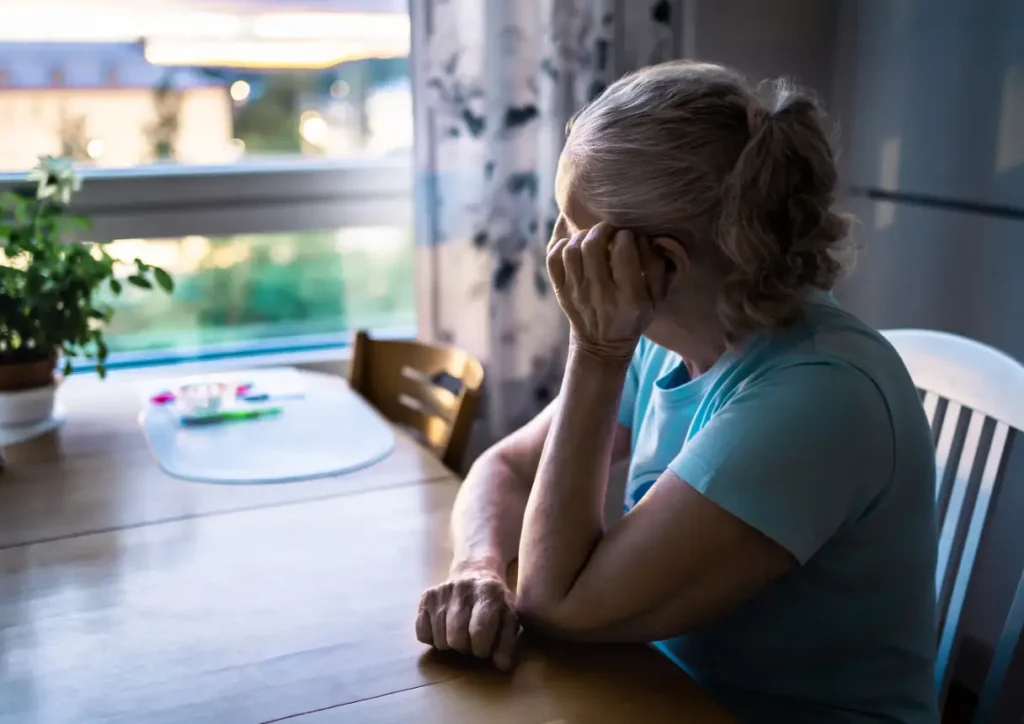
While painful, the loneliest moment middle-aged women feel is often a threshold—not an ending.
It marks the moment when:
- External validation no longer satisfies
- Old roles stop defining self-worth
- Inner truth demands attention
This stage asks a powerful question:
“Who am I when I stop performing for others?”
For many women, answering this question becomes the beginning of a more authentic life.
Reconnection Begins With Naming the Experience
Loneliness loses some of its weight when it is named.
When women allow themselves to acknowledge:
- “I feel unseen.”
- “I need emotional reciprocity.”
- “I am changing—and that matters.”
They begin reclaiming agency over their inner lives.
Connection in midlife often looks different:
- Fewer relationships, deeper meaning
- Less obligation, more honesty
- More self-trust, less self-erasure
The first reconnection is often not with others—but with oneself.
You Are Not Behind—You Are Becoming
If you are a middle-aged woman experiencing this loneliness, know this:
You are not failing at life.
You are not ungrateful.
You are not weak.
You are becoming more aware of who you are beneath roles and expectations.
The loneliest moment middle-aged women feel in midlife is not a sign of decline—it is a sign of transition.
A quiet, difficult, necessary transition.
Final Reflection
The loneliest moment middle-aged women feel in midlife is not defined by absence of people, but by absence of recognition.
It is the moment when a woman realizes she has been emotionally present for everyone—except herself.
And while that realization can feel unbearably lonely, it also carries the seed of transformation.
Because once a woman sees herself clearly, she can no longer disappear.
FAQs
What is the loneliest moment middle-aged women feel in midlife?
It is the moment when identity changes but emotional recognition does not, leading to emotional loneliness despite busy family and social roles.
Why is midlife loneliness common among women?
Midlife loneliness in women often stems from shifting roles, emotional labor overload, and a lack of reciprocal emotional support.
Is emotional loneliness different from being alone?
Yes. Emotional loneliness in midlife occurs when women feel unseen or unheard, even when surrounded by family or colleagues.
Does menopause contribute to midlife loneliness?
Hormonal changes can heighten emotional sensitivity, intensifying feelings of loneliness when support systems do not adapt.
Can the loneliest moment lead to positive change?
Yes. Many women use this moment as a turning point to redefine identity, boundaries, and emotional priorities.


 and then